When we casually notice those yellow or multi-colored Strong Fly Traps in our homes or commercial spaces, most of us perceive them as simple, passive physical traps—just sticky surfaces waiting for flies to land on them by chance. This understanding, however, vastly underestimates the sophisticated scientific design behind modern fly traps. They are far more than mere adhesive sheets; they represent a meticulously orchestrated, multi-dimensional, and highly efficient campaign of "invisible chemical warfare" targeted at flying pests. The outcome of this battle is often determined by a series of unseen chemical signals, long before a fly ever touches the surface. Integrating insights from bionics, chemical attractant technology, and materials science, their complexity and effectiveness surpass any web spun by nature's spiders.
I. From Passive Trap to Active Hunter: The Strategic Evolution of Fly Traps
Traditional fly control methods, such as swatters and standard window screens, embody a reactive, defensive mindset. They rely on human intervention or physical barriers, offering limited and often lagging effectiveness against pest infestations. Even early sticky fly papers depended largely on random collisions with flies, resulting in low efficiency. The revolutionary breakthrough of modern Strong Fly Trap s lies in their strategic shift from "passive waiting" to "active luring." They are no longer static snares but cunning "kill zones." Their core tactic is to mimic, and even surpass, the elements most attractive to flies in nature, using irresistible chemical signals to precisely draw pests from a distance to their doom. This proactive approach significantly expands the effective control radius of a single device, moving intervention upstream and turning defense into offense.
1.1 Pheromones: The Forged "Summons"
In the insect world, pheromones serve as their chemical language. Specific types, such as aggregation pheromones, can signal to conspecifics that a location is suitable for gathering, feeding, or mating. A key technological feature of high-end Strong Fly Trap s is the use of artificially synthesized or mimicked versions of these pheromones. As these pheromones slowly release into the air from the trap, they act like a broadcast of compelling misinformation within the pest population, guiding them to converge from all directions. This method of attraction works directly on insect instinct, making it far more efficient than relying on the chance discovery of random food scraps.
1.2 Food Source Mimicry: Deploying the "Exclusive Feast"
Beyond pheromones, the attractant system in fly traps also expertly replicates the scents of a fly's ideal food sources. Through in-depth research into fly olfactory preferences, scientists have developed complex chemical formulations that mimic the odors of decaying organic matter, fermenting sugars, or other organic waste. As these scent molecules disperse through the air, they represent an impeccable feast to a fly. The insects will track this scent plume directly to its source—the fly trap itself. This food-based attraction works synergistically with pheromone lures, creating a double-layered insurance policy that ensures maximum lure range and success rate.
II. Deconstructing the Core Weapon System of the "Invisible Chemical Warfare"
The potency of this "invisible chemical warfare" against flies does not stem from a single element but relies on a highly coordinated weapon system. This system comprises the Attraction Layer, the Capture Layer, and the Enhancement Layer, each playing an indispensable role in securing ultimate victory.
2.1 The Attraction Layer: Invisible Precision Guidance
The Attraction Layer initiates the entire campaign, tasked with "precision guidance." It consists primarily of the pheromone attractants and food-based attractants described earlier. These chemicals are integrated into the adhesive or the trap base using specific manufacturing techniques, ensuring a consistent and sustained release over a defined period. The release rate is carefully calibrated to ensure the scent travels far enough to create an effective "zone of attraction" without depleting too quickly. High-quality attractants are also broad-spectrum, capable of simultaneously targeting common flying pests like houseflies and fruit flies, achieving comprehensive control.
2.2 The Capture Layer: Unfailing and Powerful Restraint
Once a fly is successfully lured by chemical signals to the surface of the trap, the Capture Layer executes the final step. The core of this layer is the high-performance adhesive. This glue is not ordinary; it must possess a demanding set of characteristics: firstly, extremely high initial tack and permanent tack, ensuring the fly is immobilized instantly upon contact with no chance of escape; secondly, excellent temperature resistance and anti-aging properties, maintaining viscosity without significant degradation or seepage in both summer heat and winter cold; finally, its stickiness must remain stable, not drying out easily or becoming ineffective due to dust accumulation. This powerful physical restraint guarantees that any intruder stepping into the trap meets a certain end.
2.3 The Enhancement Layer: Dual Sensory Deception
To further boost effectiveness, many modern Strong Fly Trap s incorporate an "Enhancement Layer," most notably through color attraction. Scientific studies have shown that flies and other insects are attracted to specific light wavelengths. For instance, bright yellow and gold are highly effective at attracting fruit flies and some species of houseflies. This color mimics ripe fruit or certain decaying materials, adding another layer of visual enticement. When chemical and visual signals work in concert, the fly trap achieves a comprehensive "sensory deception" of the pest, making its approach almost an irresistible instinct.
III. Practical Application: Maximizing the Impact of the "Chemical Warfare"
Possessing advanced weaponry does not guarantee success. Correct strategic deployment is crucial to maximizing the efficacy of Strong Fly Trap s. Improper placement can not only waste resources but potentially lead to the failure of the entire control program.
3.1 Strategic Deployment: Choosing Key Battlefield Positions
Placing fly traps is not a random act but should be based on a deep understanding of the "enemy"—the flight patterns and behavior of flies.
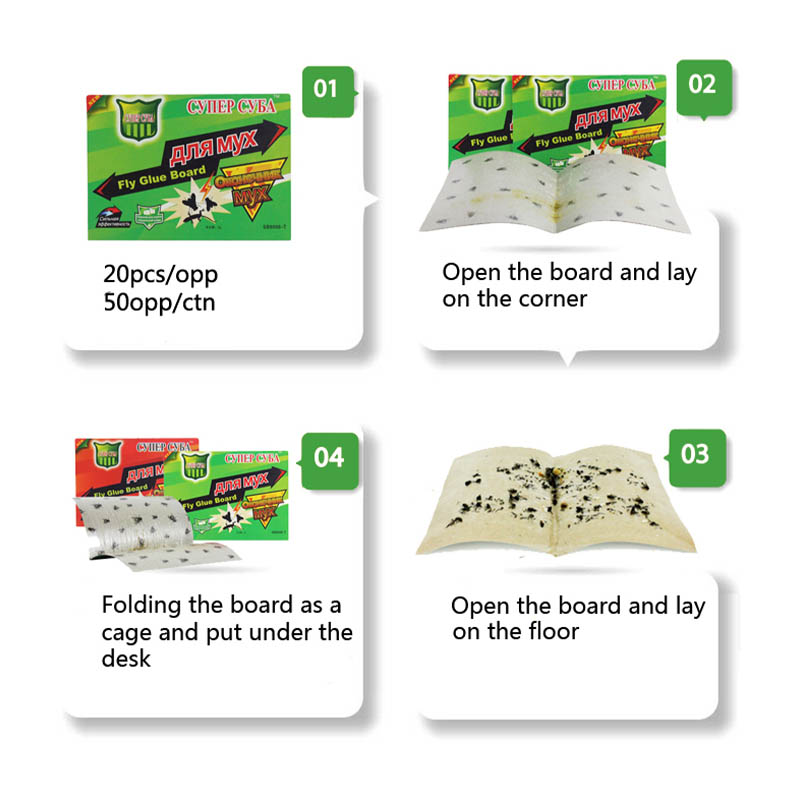
Core Principle: Place traps along fly flight paths or between their resting areas and food sources. Indoors, flies often travel along walls, door frames, window edges, and other linear structures.
Kitchens and Dining Areas: This is the primary battlefield. Focus on areas above trash bins, near sinks, on the inside of windows, and around food storage areas. Avoid placing them directly on stovetops or immediately above open food to prevent contamination.
Commercial Spaces: In establishments like restaurants, food processing plants, and supermarkets, deploy traps just inside entrances, near loading docks, in waste disposal areas, and below air vents. Create an effective, multi-layered defense network.
Height Strategy: Adjust hanging height based on the target pest. For houseflies, a height of 1.5 to 2 meters is often ideal. For fruit flies, placement at lower levels, closer to counter surfaces, may be necessary.
3.2 Environmental Synergy: Cutting Off All Escape Routes
To ensure the fly trap is the most lethal option available, we must make the natural alternatives less appealing.
Eliminate Natural Food Sources: Enforce strict sanitation standards. Promptly clean up food residues and kitchen waste. Keep countertops and floors dry and clean. Store all food in sealed containers. A clean environment forces flies to rely on the "exclusive feast" we have laid out.
Maintain Equipment Efficacy: Ensure traps are not covered in dust or grease, which can hinder the release of attractants and reduce stickiness. Replace expired products regularly to maintain consistent control pressure.
3.3 Monitoring and Assessment: From Tactical Wins to Strategic Victory
Strong Fly Trap s are not just control devices; they are also highly effective monitoring tools. By regularly inspecting the types and quantities of pests captured, we can accurately assess pest density in specific areas, identify the primary species present, and even trace their entry points. This valuable data provides a scientific basis for adjusting control strategies and pinpointing core problem areas, enabling a shift from scattered "tactical wins" to a comprehensive "strategic eradication."
IV. Beyond the Spider's Web: The Technological and Environmental Significance of Modern Fly Traps
The "invisible chemical warfare" model represented by Strong Fly Trap s is a successful application of modern Integrated Pest Management principles. It demonstrates an efficient, targeted, and relatively eco-friendly solution. Compared to the broad spraying of chemical insecticides, its mode of action is far more precise, greatly reducing the risk of non-target organisms' exposure to pesticides and minimizing potential environmental and food contamination. The chemical attractants used are typically specific to the target pests and are safe for humans and pets when used as directed. This highly specific control method signifies a step away from the era of crude chemical pesticides towards a more refined, intelligent, and sustainable future for pest management.
In summary, that quiet, colored panel sitting in the corner is a microcosm of humanity's relentless battle against micro-world pests. It is a silent yet highly efficient form of "invisible chemical warfare," achieving precise strikes and effective control against flying insects through sophisticated chemical signal mimicry, powerful physical capture, and multi-sensory deception. The next time you see one, may you recognize it not just as a fly trap, but as a miniature frontline fortress, embodying scientific wisdom and silently safeguarding the hygiene and health of our living and working environments.